
 By
By 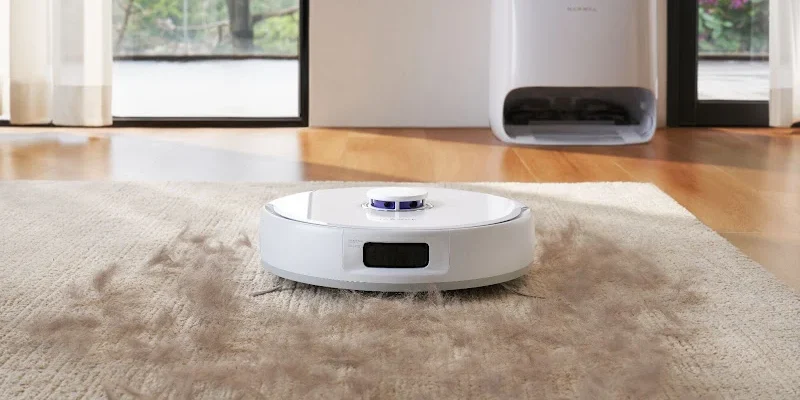
Few household conveniences feel quite as satisfying as scheduling a robot vacuum to clean your home while you are away, only to experience the sinking disappointment of an alert buzzing your phone twenty minutes later. You open the app to find your automated helper stranded in the living room, wheels spinning helplessly or its brush motor shut down on a plush area rug.
High-pile carpets, shag rugs, and dense wool floor coverings are the ultimate physical test for autonomous floor cleaners. While these textiles provide warmth, acoustic insulation, and underfoot luxury, their dense fibers present a hostile obstacle course for low-clearance appliances. Sinking chassis, tangled brush rolls, and confused downward-facing sensors routinely trigger an endless loop of error codes.
Preventing these stalls does not mean banishing your favorite rug to the basement or giving up on automated cleaning. By understanding the mechanical and sensory triggers that paralyze your vacuum, you can implement a series of targeted physical modifications, software adjustments, and environmental fixes to keep your floor plan running smoothly.
The Engineering Conflict: Why Deep Fibers Trigger System Errors
To fix recurring stalls, you first need to understand what is happening under the hood when your vacuum transitions from hardwood or low-profile tile onto a thick carpet. Robot vacuums rely on small, low-voltage direct-current motors and a delicate network of optical and tactile sensors. High pile challenges every single one of these components simultaneously.
The Roller Resistance and Torque Trap
The most frequent notification that owners encounter is an alert indicating a jammed brush roller. Inside the vacuum head, a cylindrical roller spins at several thousand revolutions per minute to agitate dirt out of carpet weaves. On flat flooring or low commercial carpet, this roller encounters minimal physical drag.
When the vacuum climbs onto a high-pile carpet, the tall, loose yarns sink deep into the brush cavity. These fibers wrap around the bristled roller, exerting immense mechanical friction. Robot vacuums feature built-in safety firmware that constantly monitors electrical current draw. If the roller motor draws excessive current trying to force its way through resistant carpet yarns, the system cuts power to prevent the motor from overheating or burning out its gears. What looks like a mechanical failure is actually a deliberate protective shutdown.
Sinking Clearance and Wheel Suspension Faults
Robot vacuums are designed with low centers of gravity and minimal ground clearance to maximize suction efficiency at the intake port. On solid surfaces, the front omnidirectional caster wheel and two spring-loaded drive wheels maintain uniform elevation.
On a thick, forgiving rug, the heavy body of the vacuum causes the front caster to sink like a stone into deep mud. As the nose dives into the fibers, the spring-loaded drive wheels can become unloaded, losing their downward traction against the subfloor. When the vacuum’s internal microswitches detect that the drive wheels have extended fully downward without feeling resistance, the machine concludes that it is suspended in mid-air or stuck over an edge, immediately halting the cleaning cycle.
Optical Confusion and Phantom Cliff Errors
Perhaps the most baffling carpet error occurs when a vacuum rolls onto a perfectly flat, plush rug and abruptly stops, reporting that it has encountered a dangerous drop-off or staircase.
This malfunction stems from the cliff sensors situated around the perimeter of the vacuum’s bottom housing. These sensors fire downward infrared beams and measure the time it takes for the light to bounce back. If the light fails to return within a specific microsecond threshold, the robot assumes it is hanging over a staircase and executes an emergency stop.
Deep, dense yarn acts as an optical sponge. The open spaces between loose fibers trap or scatter infrared light rather than reflecting it straight back to the receiver. If your plush rug also features dark, rich tones—such as charcoal, navy, or deep brown—the dark dyes absorb the infrared spectrum entirely. The robot’s optical brain perceives the dense, dark rug not as a soft floor, but as a bottomless void.
Strategic Hardware Adjustments
You can resolve several physical choke points without spending money on a replacement vacuum simply by altering the components that interact directly with the fibers.
Transitioning to Bristleless Rubber Rollers
If your machine utilizes a traditional hybrid brush roll containing rows of stiff nylon bristles interwoven with rubber squeegee flaps, those bristles are acting like miniature hooks. They actively comb through the high-pile strands, grabbing loose yarn and pulling fibers into the drive bearings.
Many modern robotic platforms offer interchangeable roller options. Switching to an all-rubber, finned brush roller dramatically reduces surface area friction. Rubber fins flick across the top of carpet fibers without gripping them, agitating debris loose through impact rather than sweeping resistance. If your manufacturer does not produce a rubber alternative, removing the roller entirely—if your model supports suction-only pass-through—allows the vacuum to clear loose dust from high pile without triggering roller motor overload.
Managing the Side Sweeper
The spinning side brush is invaluable for dislodging breadcrumbs along baseboards, but on high-pile textiles, it is a liability. The long, flexible nylon arms easily snag in deep pile, tangling the fibers until the small side-brush gearbox binds.
If your home features significant square footage of thick rugs, consider removing the side brush via its center screw prior to scheduled whole-house runs. Alternatively, trim a few millimeters off the ends of the bristle clusters with sharp shears. Shortening the bristles stiffens their lateral deflection, reducing their tendency to wrap around tall carpet strands.
The Paradox of Suction Power
Intuition suggests that cleaning a deep carpet requires dialing suction up to maximum boost. In reality, cranking a vacuum to its highest airflow setting creates a powerful vacuum seal between the intake shroud and the dense carpet backing.
This tight seal pulls the vacuum downward, embedding the chassis even deeper into the pile and spiking the friction on the drive wheels. If your vacuum repeatedly stalls from drive wheel slip or motor strain on rugs, navigate to your mobile application and reduce the suction power to standard or medium. Slightly lower airflow breaks the airtight suction lock, allowing the machine’s drive wheels to regain traction and glide across the carpet surface.
Software Tactics: Dividing and Conquering Your Floor Plan
Modern robotic vacuums are guided as much by software algorithms as they are by physical wheels. When hardware tweaks reach their limits, intelligent map management provides the definitive solution.
Implementing Directional Cleaning Passes
Carpets possess a natural grain, known in the flooring industry as the lay of the pile. Vacuuming against the grain dramatically increases drag, while moving with the grain allows the appliance to slide smoothly.
If your companion app supports directional cleaning customization, orient the cleaning path parallel to the way the carpet fibers naturally lean. Approaching the rug from an angle that works with the pile prevents the front bumper from digging into the edge and stalling out before the cleaning pass even begins.
Setting Up Exclusion Zones for Unsolvable Shags
Certain textiles—particularly loose-loop Berber carpets, ultra-dense shag, and long faux-fur sheepskin rugs—are fundamentally incompatible with low-profile robotics. The loose loops risk catching on rotating parts, which can damage both the vacuum’s drive gears and the carpet itself.
Rather than enduring daily rescue missions, use your mobile application’s LiDAR or optical map to draw clean no-go zones or virtual walls directly over these trouble spots. By isolating high-risk rugs from the automated schedule, your robot can efficiently maintain the surrounding hard surfaces and low-profile carpets unattended, leaving the deep shag for a targeted, once-a-week session with a high-clearance manual upright vacuum.
Simple Modifications for the Rug Itself
Sometimes the problem is not the vacuum or its software, but how the rug sits on the floor. A few minor adjustments to the textile can eliminate the mechanical transitions that trip up your machine.
-
Anchor the Transitions: Lightweight high-pile rugs frequently buckle when a robot’s drive wheels push against the perimeter binding. If the edge rolls upward, it activates the front collision bumper, convincing the robot that it has hit a solid wall. Secure the perimeter using heavy-duty, double-sided carpet tape or silicone rug-gripping pads to keep the edge rigid and flat against the subfloor.
-
Tuck Away Decorative Fringe: Braided or dangling fringe along the perimeter of an area rug is an absolute trap for spinning axles. Flip fringe tassels entirely underneath the rug backing and anchor them with flat masking tape. The vacuum can then scale the edge cleanly without snagging loose threads in its wheel axles.
-
Add a Beveled Under-Pad: If your robot struggles to make the sheer vertical leap from bare hardwood up onto a thick one-inch rug edge, install an under-rug felt pad cut slightly smaller than the rug itself. Stepping the height creates a subtle, beveled ramp that allows the robot’s front caster wheel to roll up the incline rather than smacking squarely into a fabric wall.
Maintaining luxurious high-pile carpets alongside the automated convenience of a robot vacuum does not require constant supervision. By minimizing roller drag, dialing back excessive suction seals, and properly securing physical borders, you can eliminate the endless error chimes and let your vacuum do the job it was built to do.











Comments