
 By
By 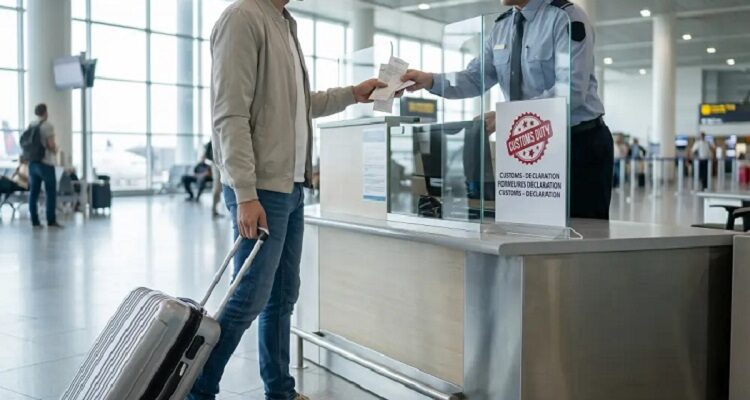
Shopping abroad carries an undeniable appeal, particularly across Europe, where the promise of a Value Added Tax (VAT) refund can effectively discount luxury goods, fine jewelry, leather goods, and fashion by 10% to 20%. Yet every year, millions of dollars in unclaimed refunds remain in the coffers of foreign tax authorities.
The money is not lost because travelers change their minds. It is lost because international airports often treat the refund process like an administrative gauntlet. Between confusing terminal layouts, separate desks for customs and payment brokers, and aggressive flight boarding times, travelers frequently abandon their claims out of sheer frustration.
Securing your refund requires treating the airport return as a calculated logistical operation. When you understand the chronological sequence of checkpoints, the rules governing your itinerary, and the financial traps lurking at the payout desk, collecting your refund becomes predictable and stress-free.
Setting the Stage Before You Reach the Airport
A successful refund at the terminal depends entirely on the preparation you complete while still in the store. You cannot show up at an airport customs desk with an ordinary cash register receipt and expect cash back.
When making an eligible purchase, you must present your physical passport and explicitly request a tax-free form from the merchant. Retailers partner with processing intermediaries such as Global Blue, Planet, or Innova Tax Free, which generate an official declaration containing your personal details, home address, passport number, and an itemized breakdown of the VAT paid.
Keep every receipt stapled directly to its corresponding tax-free voucher. More importantly, understand the golden rule of export: the merchandise must remain unused and in its original retail packaging. If an item has been worn, laundered, or unboxed, customs officials have the legal authority to reject the export validation on the spot. Pack these purchases in an easily accessible compartment of your luggage rather than burying them beneath everyday travel items.
The Itinerary Trap: Where to Claim on Connecting Flights
The single biggest source of confusion for international travelers involves connecting flights within a customs territory, most notably the European Union. The law requires you to validate your export at your final point of departure from that economic zone.
If you are flying directly from Paris to New York, your path is straightforward: you complete your paperwork in Paris. However, if your flight path takes you from Rome to Frankfurt, and then on to New York, Germany represents your exit point from the EU.
In this scenario, how your goods are transported dictates where you must validate them:
-
Items in Checked Baggage: You must clear customs at your origin airport (Rome). Because your checked suitcases will be transferred automatically through Frankfurt to New York, German customs will never have the opportunity to physically inspect those items.
-
Items in Carry-On Luggage: You must clear customs at your transit hub (Frankfurt). Because your carry-on luggage stays with you across the Schengen border, you are still inside the customs union until you board the transatlantic leg.
Failing to separate your purchases according to these rules will result in a customs officer turning you away, forcing you to sprint through a transit airport to find an airside customs booth during a tight layover.
The Crucial Airport Sequence: Checked vs. Carry-On Bags
Timing is everything. To process your refund without missing your flight, plan to arrive at the airport at least three to four hours before departure. The order in which you move through the terminal is rigid, and executing steps out of order can ruin your claim.
Handling Goods in Checked Baggage
If your purchases are packed inside your large suitcases, you must navigate the landside check-in area before passing through airport security.
-
Visit the Airline Check-In Counter First: Inform the ticketing agent that you have tax-free purchases in your checked luggage. The agent will weigh your bag, print your boarding pass, and attach regular baggage routing tags to the suitcase. Crucially, instruct the agent not to place the bag on the conveyor belt. Take the tagged bag back into your possession.
-
Proceed Directly to the Customs Office: Wheel your tagged luggage to the landside customs desk. Present your passport, boarding pass, and completed tax-free forms. The officer may ask you to open the luggage to verify that the items match the paperwork.
-
Obtain the Validation: The officer will either stamp the physical vouchers or instruct you to scan them at an electronic terminal.
-
Surrender the Luggage: In most major terminals, the customs office has its own dedicated baggage drop belt. If not, you return the stamped, tagged bag to your airline’s oversized baggage desk.
Handling Goods in Carry-On Luggage
If your purchases consist of high-value items like luxury watches, cameras, or jewelry, never pack them into checked bags. Carry them with you through the main security and passport control lanes.
Once you have formally exited border control and entered the international departures lounge (airside), locate the airside customs desk. Present your boarding pass, passport, documentation, and the physical items. Because carry-on goods are small and portable, border officers inspect them far more rigorously than checked luggage. Keep tags attached and boxes intact until you have the stamp in hand.
Digital Kiosks Versus Ink Stamps
Many modern European airports have transitioned to automated customs kiosks, such as the PABLO system in France or DIVA in Spain. These machines allow travelers to scan the barcode printed on their tax-free voucher using an optical reader.
If the kiosk screen displays a green confirmation screen, your item has been successfully validated electronically. You do not need to speak with a customs officer or collect an ink stamp; the record updates instantaneously in the operator’s central database.
However, if the kiosk flashes a red warning screen, you must immediately step into the staffed customs queue for manual processing. A red screen often indicates a random compliance audit, a mismatch in merchant data, or an item value exceeding an automated clearance threshold. Never walk away from a red screen; without an electronic approval or an officer’s physical ink stamp, your refund is completely void.
Collecting Your Money: Avoiding the Payout Traps
Securing customs validation is only half the battle. You must still submit the validated forms to the refund operator to collect your money. At this juncture, travelers frequently fall victim to predatory foreign exchange fees.
Cash Desks and the Dynamic Currency Conversion Trap
If you visit an airport refund counter—such as Global Blue or Travelex—to collect physical cash, the agent will almost certainly ask if you prefer your payout in US dollars. While receiving greenbacks sounds convenient, accepting this offer activates Dynamic Currency Conversion.
Under this scheme, the broker applies an internal exchange rate that can quietly wipe out 10% to 15% of your total refund through inflated conversion margins, on top of per-transaction administrative fees. If you insist on cash, request the payout in the local currency of the airport (such as Euros or British Pounds). You can then spend that currency on duty-free items or convert it later through a financial institution offering fair mid-market rates.
The Superior Alternative: Direct Credit Card Reversals
In almost every scenario, electing to have your refund returned to a major credit card offers the best financial return.
To choose this route, write your credit card number clearly on the validated tax-free form. Take a crisp, well-lit smartphone photograph of every single stamped voucher and its associated receipt for your records, making sure the barcode and stamp are clearly visible.
Seal the paperwork inside the pre-addressed, postage-paid envelope supplied by the merchant, and drop it into the designated refund broker mailbox located right beside the customs desk. Processing typically takes anywhere from two to six weeks. The operator will convert the refund at standard wholesale banking rates, ensuring you keep the vast majority of the tax you paid abroad.
Getting your money back requires patience and organization, but it is not a game of chance. By giving yourself ample time, keeping your purchases pristine, and navigating customs in the correct sequence, you can turn an intimidating airport errand into a seamless, high-yield final step of your journey.








Comments