
 By
By 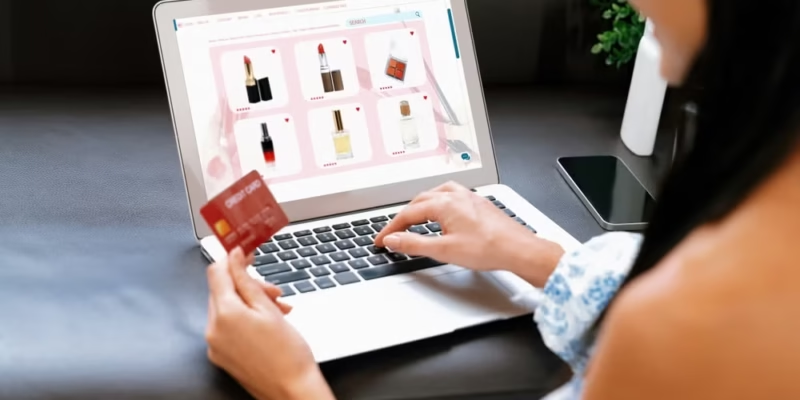
The global retail landscape has experienced a seismic shift over the past few decades. Historically, shopping was an intentional, physical excursion that required consumers to dedicate specific blocks of time to travel to commercial hubs, browse brick-and-mortar storefronts, and interact face-to-face with sales associates. While product quality, brand reputation, and price remain important factors in consumer decision-making, an entirely different variable has risen to dominance: convenience.
In a fast-paced world characterized by demanding work schedules, digital connectivity, and diminishing leisure time, consumers place an unprecedented premium on their time and effort. Modern shoppers no longer view convenience as an occasional luxury; they treat it as a baseline expectation. Retailers that fail to optimize for friction-free experiences are rapidly losing market share to agile platforms that specialize in making transaction processes as effortless as humanly possible. Understanding how the pursuit of convenience shapes modern shopping preferences is crucial for analyzing the trajectory of global commerce.
The Evolution of the Convenience Paradigm
To appreciate the current retail climate, one must analyze how the concept of convenience has evolved. In early retail models, convenience was strictly geographic. A neighborhood grocery store or a downtown department store was considered convenient simply because it was physically closer to a consumer’s home than its competitors.
The Digital Disruption and On-Demand Economy
The widespread adoption of high-speed internet and smartphone technology permanently decoupled convenience from physical proximity. With the rise of e-commerce giants, the retail ecosystem transitioned from a bring-the-consumer-to-the-product model to a bring-the-product-to-the-consumer model. The modern consumer can browse millions of global inventories from their living room couch at any hour of the day or night. This continuous accessibility has shifted consumer psychology, cultivating an environment where any degree of unnecessary physical or digital friction is viewed as an unacceptable operational flaw.
Seamless Digital Interfaces and Frictionless Checkout
The digital storefront is often the first touchpoint a consumer has with a brand. In this virtual environment, convenience is measured in click counts, page load speeds, and intuitive user interfaces.
One-Click Purchasing and Saved Credentials
One of the most powerful digital innovations in retail history was the implementation of automated, single-click purchasing systems. By allowing consumers to securely store their billing addresses, shipping details, and credit card information, retailers removed the primary psychological barrier to completing a purchase: the tedious process of manual data entry. Every second a consumer spends searching for their wallet or typing a sixteen-digit card number is an opportunity for them to reconsider the purchase, leading to shopping cart abandonment.
The Rise of Integrated Digital Wallets
The convenience of checkout has been further enhanced by the integration of independent digital payment ecosystems. These platforms allow for instantaneous biometric verification, such as facial recognition or fingerprint scanning, to authorize international transactions securely. By removing the need to navigate external banking portals or fill out extensive verification fields, digital wallets have made mobile commerce the preferred shopping method for younger demographics.
The Logistics Race: Fast Delivery and Flexible Fulfillment
Once a transaction is completed, the battleground for convenience shifts directly to the physical supply chain. The historical expectation of waiting one to two weeks for a mail-order package to arrive has been completely dismantled by modern logistical networks.
Next-Day and Same-Day Delivery Networks
Major e-commerce corporations have spent billions of dollars constructing localized fulfillment centers, deploying advanced predictive inventory algorithms, and partnering with crowd-sourced delivery fleets. The result is the normalization of next-day or even same-day home delivery. This immediacy appeals directly to the consumer desire for instant gratification, narrowing the traditional advantage that brick-and-mortar stores held regarding immediate product availability.
Omni-Channel Fulfillment Models
Realizing that home delivery is not always perfectly aligned with a shopper’s daily routine, innovative retailers have popularized flexible hybrid models:
-
Buy Online, Pick Up in Store: This approach allows consumers to browse and purchase items from their digital devices, ensuring the product is secured, while avoiding shipping fees and picking up the item at a designated service desk in minutes.
-
Curbside Pickup Options: Popularized during global health disruptions, curbside pickup represents the pinnacle of physical retail convenience. Consumers drive to a storefront, park in a designated space, and have an employee place their purchases directly into their vehicle trunk without the consumer ever unbuckling their seatbelt.
-
Smart Locker Networks: Placing secure, automated pickup lockers in high-traffic community areas such as gas stations, supermarkets, and public transit hubs allows consumers to retrieve their packages securely on their own schedule, eliminating the risk of home package theft.
The Subscription Economy and Automated Replenishment
The ultimate expression of shopping convenience is an environment where the consumer does not have to actively shop at all. The subscription business model has migrated from digital media streaming into mainstream physical retail.
Routine Household Replenishment
Consumers can now opt into automated replenishment schedules for non-discretionary, recurring household necessities such as laundry detergents, pet food, vitamins, and personal grooming products. By offering slight financial discounts to incentivize subscription enrollment, brands lock in predictable, recurring revenue streams while liberating the consumer from the cognitive load of tracking inventory levels and making routine trips to the grocery store.
Curated Discovery Boxes
Beyond basic utility, subscriptions have captured discretionary spending through curated discovery models. In sectors like fashion, specialty coffee, cosmetics, and artisanal foods, experts curate a personalized selection of items based on a user initial style profile and ship them directly to their door at regular intervals. This fuses the logistical ease of home delivery with a curated shopping experience, transforming the chore of product discovery into a convenient form of home entertainment.
Frictionless Return Policies as a Decision Catalyst
A major source of consumer anxiety in online shopping is the risk of product dissatisfaction. Because a consumer cannot physically touch a fabric, verify a color profile, or try on a garment prior to a digital purchase, a complicated return policy acts as a massive deterrent to growth.
Innovative brands counteract this anxiety by designing return processes that are completely hassle-free. Providing pre-printed adhesive return labels, establishing partnerships with third-party drop-off locations that do not require packaging or boxing, and offering immediate digital store credit upon the initial drop-off scan minimizes the consumer risk. A transparent, effortless return policy builds immense brand trust and encourages consumers to buy multiple variations of an item simultaneously, knowing they can return the unwanted versions without friction.
Frequently Asked Questions
What is the difference between choice paralysis and convenience in modern retail?
Choice paralysis occurs when a consumer is presented with an overwhelming volume of identical product options, leading to cognitive fatigue and decision deferral. Convenience involves simplifying this process through advanced search filters, personalized algorithm recommendations, and curated options that help the consumer find their ideal product instantly without wading through irrelevant inventory.
How does the preference for convenience affect the pricing of consumer goods?
Consumers are historically willing to pay a premium for convenience, a concept known as the convenience tax. This manifests as delivery fees, subscription service markup, or higher baseline prices at small-format neighborhood express stores compared to bulk wholesale clubs. The value the consumer places on saving time and physical effort frequently outweighs their desire for the absolute lowest possible price.
Does the trend toward convenience harm local independent businesses?
The convenience trend can create significant challenges for traditional independent businesses that lack the capital to build advanced mobile apps or complex same-day delivery networks. However, independent retailers can survive and thrive by adopting third-party logistics platforms, utilizing local e-commerce hosting tools, and emphasizing community connection, curation, and experiential retail elements that algorithms cannot easily replicate.
What is the role of artificial intelligence in advancing retail convenience?
Artificial intelligence drives convenience by analyzing vast datasets of past consumer behavior to anticipate future needs. It powers conversational chatbots that handle customer service inquiries instantaneously, optimizes delivery routes to ensure faster delivery times, and adjusts digital storefront layouts in real time to present consumers with the exact products they are most likely to purchase.
How does the demand for convenience impact global environmental sustainability?
The desire for immediate convenience often creates significant environmental trade-offs. Same-day delivery services prevent fulfillment centers from consolidating shipments, resulting in more delivery vehicles on the road driving longer distances with partial loads. Furthermore, fast shipping and easy return policies generate immense amounts of single-use cardboard and plastic packaging waste that strains municipal recycling systems.
What does the term omni-channel retail mean in the context of consumer convenience?
Omni-channel retail is an approach that seamlessly integrates a brand’s physical storefronts, website, mobile application, and social media platforms into a single, cohesive consumer experience. It ensures that a customer can begin their shopping journey on a mobile app, track updates via text message, modify their order on a desktop computer, and complete the process by picking up the item at a physical store without any loss of data or continuity.










Comments